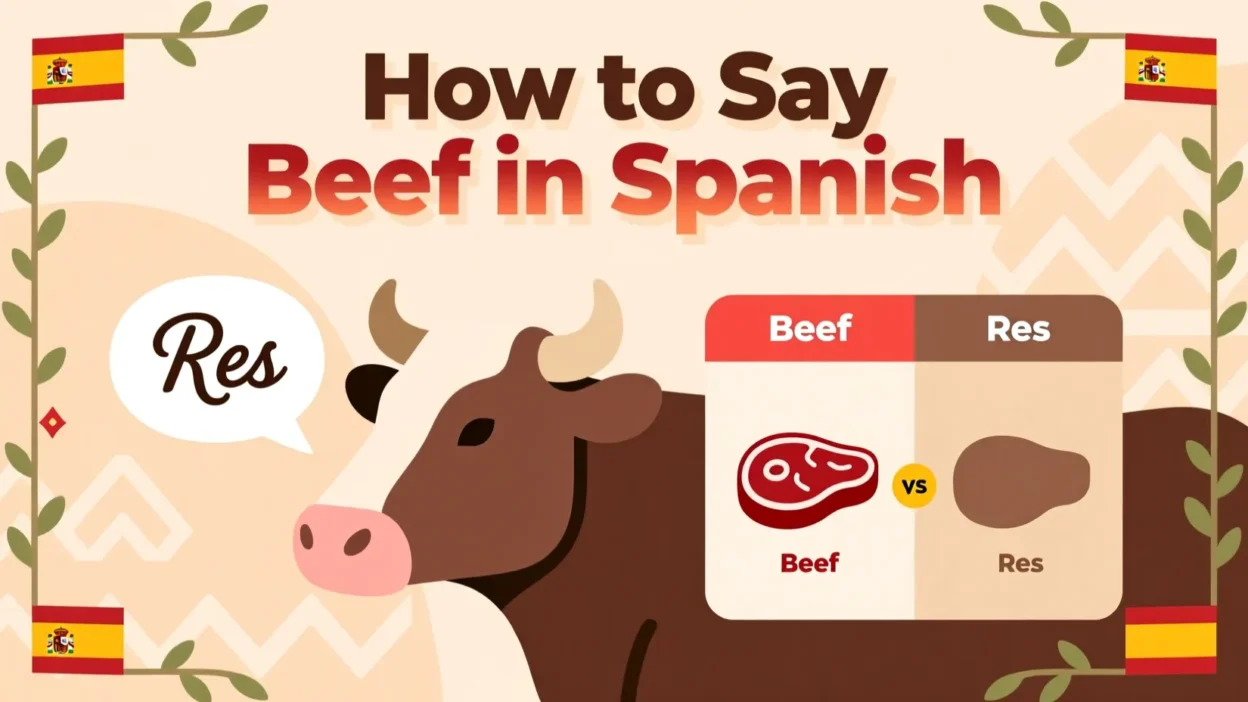
“Beef” in Spanish is commonly said as “carne de res” when referring to the meat in cooking or grocery contexts. In casual conversation, people may simply say “res” to mean beef.
Many users search for how to say beef in Spanish when learning food vocabulary, cooking recipes, or shopping in Spanish-speaking countries. The user intent is clear: they want simple, easy-to-remember words that are accurate and practical for daily use.
In this guide, you will learn how to say “beef” in Spanish, when to use each term, and pronunciation tips. These beginner-friendly explanations help you communicate clearly and confidently about food in Spanish.
15 Ways to Say Beef in Spanish (with Meaning, Origin & Usage)
Let’s explore 15 common words and phrases for “beef” you’ll hear across the Spanish-speaking world.
1. Carne de res – “Beef”
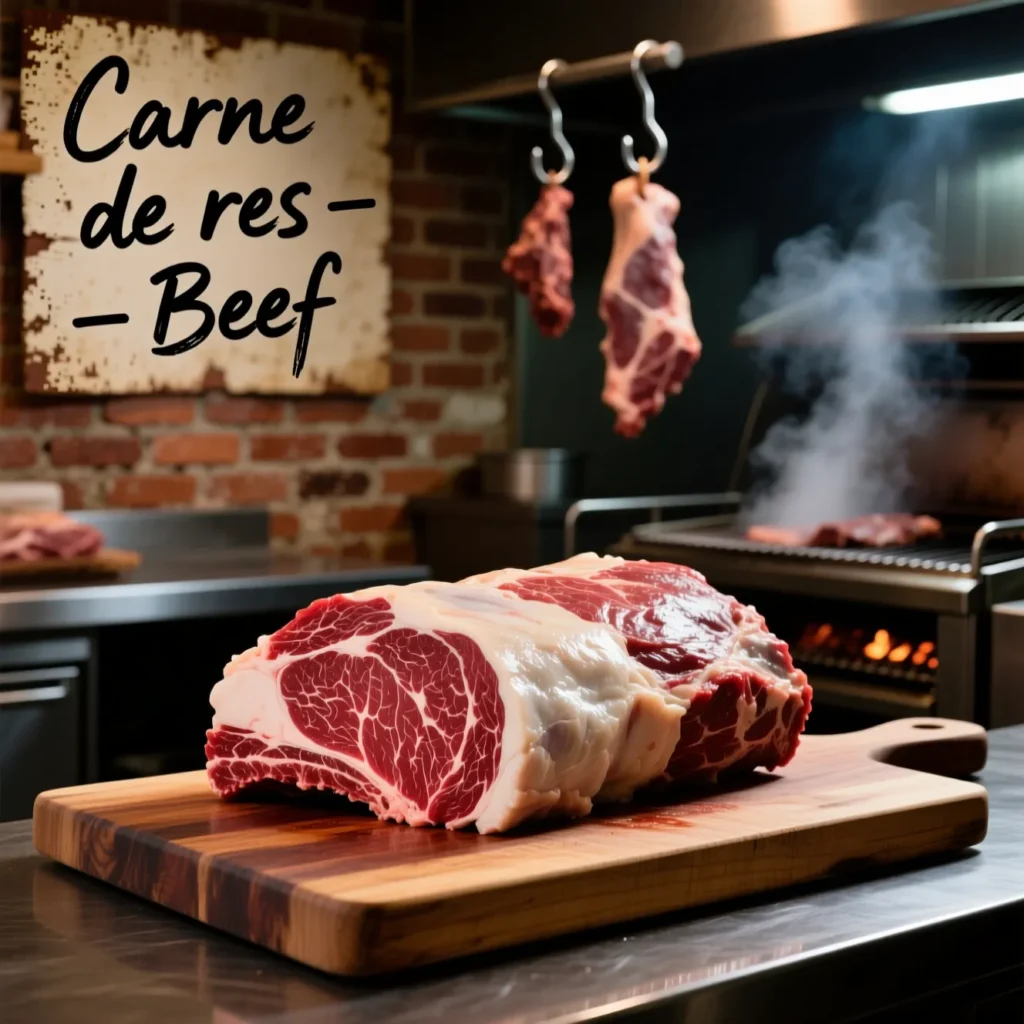
Meaning: The standard translation for “beef.”
Origin: Res means “livestock,” so carne de res literally means “meat of cattle.”
Example: Quiero un plato de carne de res. — I want a plate of beef.
Usage: Common across all Spanish-speaking countries.
2. Res – “Cattle / Beef”
Meaning: Short form for carne de res.
Example: La res es mi carne favorita. — Beef is my favorite meat.
Usage: Informal and widely understood.
3. Buey – “Ox”
Meaning: Refers to ox meat, but sometimes used for beef.
Example: El estofado de buey es delicioso. — The ox stew is delicious.
Usage: Used in Spain and some Latin regions.
4. Ternera – “Veal” / “Young beef”
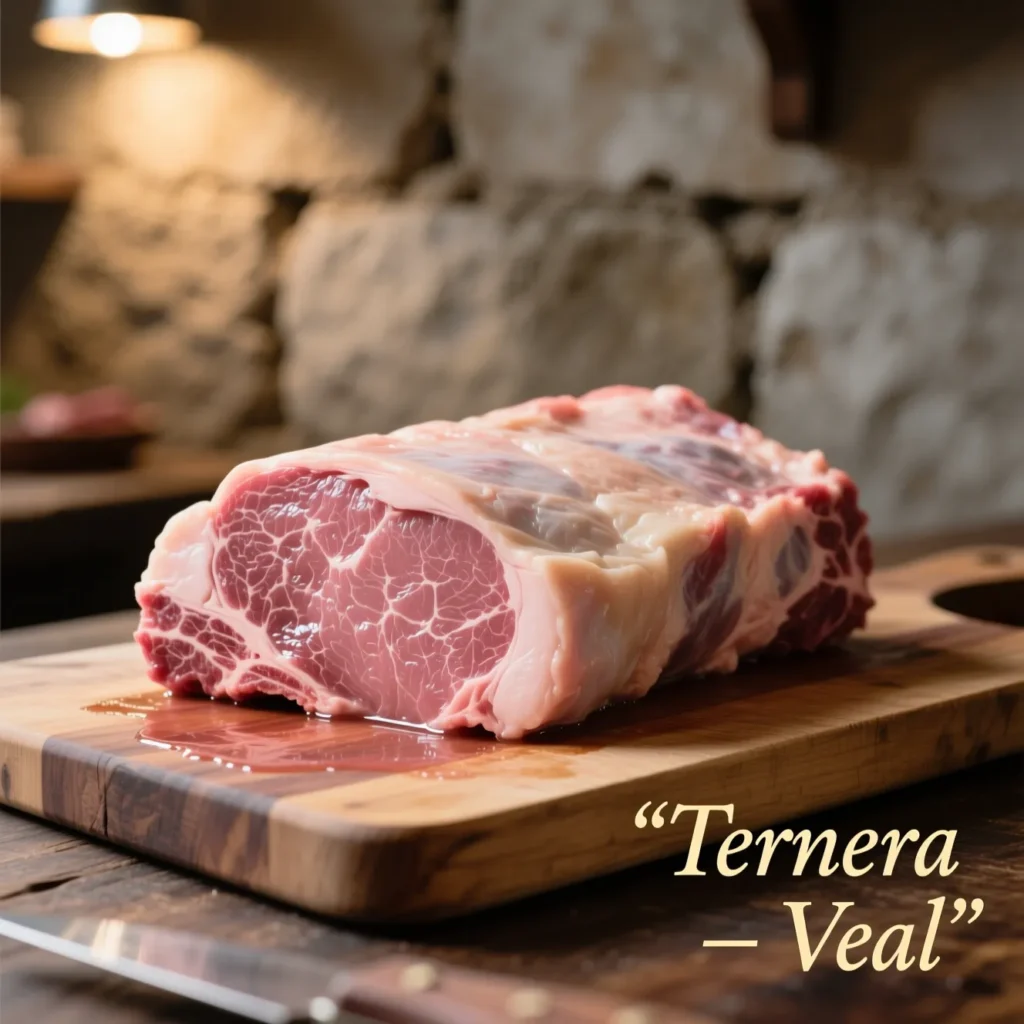
Meaning: Meat from a young cow.
Example: Prefiero la ternera por su sabor suave. — I prefer veal for its mild flavor.
Usage: Common in Spain and gourmet contexts.
5. Filete de res – “Beef fillet / steak”
Meaning: A specific cut of beef (steak).
Example: Voy a pedir un filete de res. — I’ll order a beef fillet.
Usage: Restaurant and menu term.
6. Asado – “Roast beef / barbecue”
Meaning: Refers to grilled or roasted beef.
Example: El asado argentino es famoso en todo el mundo. — Argentine barbecue is famous worldwide.
Usage: Very common in Argentina, Chile, and Uruguay.
7. Carne asada – “Grilled beef”

Meaning: Literally “grilled meat,” usually beef.
Example: Vamos a comer carne asada este domingo. — We’re having grilled beef this Sunday.
Usage: Popular in Mexico and Central America.
8. Churrasco – “Barbecued beef steak”
Meaning: Thin, grilled beef cut.
Example: El churrasco se sirve con papas fritas. — The churrasco is served with fries.
Usage: Common in Latin America, especially Chile and Argentina.
9. Bistec – “Beef steak”
Meaning: Derived from English “beefsteak.”
Example: Quiero un bistec bien cocido. — I want a well-done steak.
Usage: Common in Mexico, the Caribbean, and Spain.
10. Carne molida – “Ground beef”
Meaning: Minced or ground beef.
Example: Compré carne molida para hacer tacos. — I bought ground beef to make tacos.
Usage: Everyday use in Latin America.
11. Carne picada – “Minced beef”
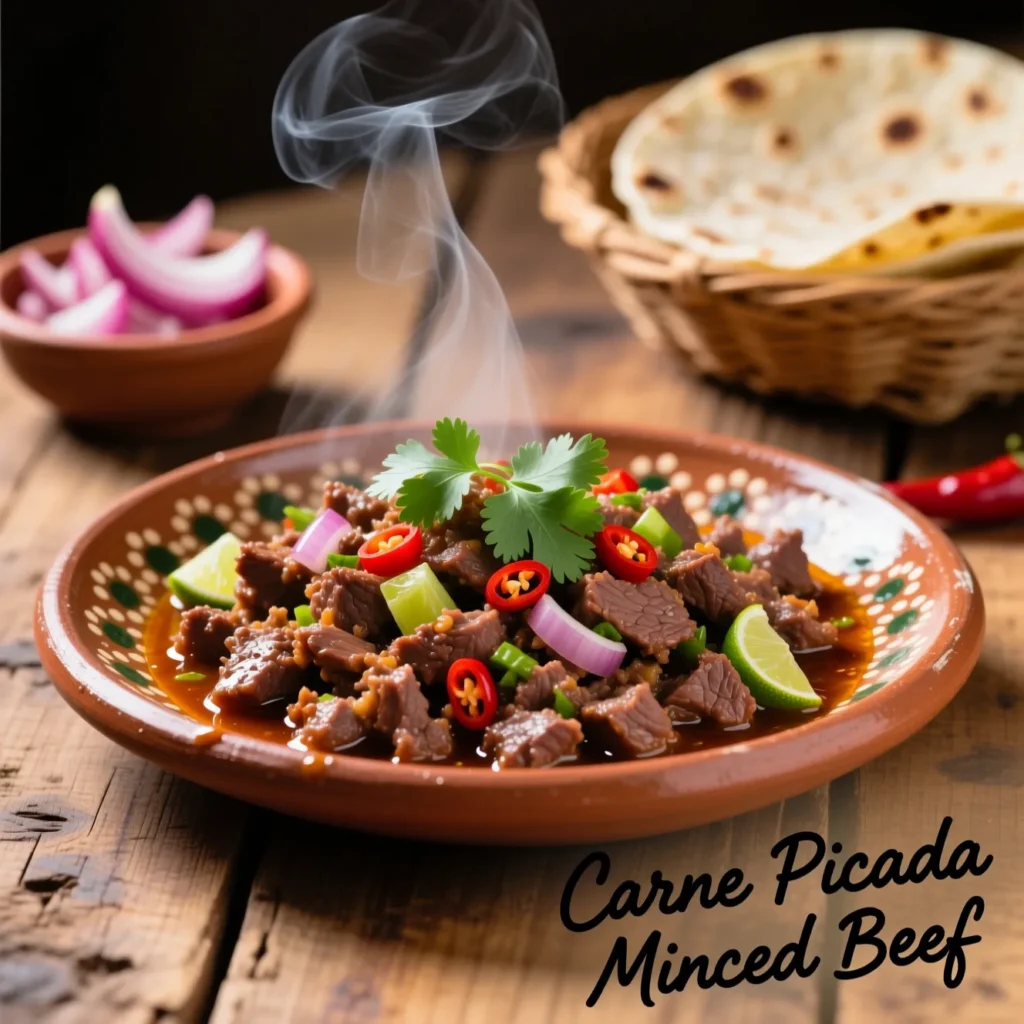
Meaning: Same as carne molida, often used in Spain.
Example: Usa carne picada para la salsa boloñesa. — Use minced beef for the Bolognese sauce.
Usage: Spain and some South American regions.
12. Roast beef – “Roast beef”
Meaning: English loanword used in menus.
Example: Sirven roast beef con puré de papas. — They serve roast beef with mashed potatoes.
Usage: Found in modern or international restaurants.
13. Carne vacuna – “Cow meat”
Meaning: Another formal term for beef.
Example: La carne vacuna es rica en proteínas. — Beef is rich in protein.
Usage: Technical or formal contexts, common in Argentina.
14. Carne roja – “Red meat”
Meaning: Refers generally to beef and similar meats.
Example: La carne roja debe comerse con moderación. — Red meat should be eaten in moderation.
Usage: General or health-related term.
15. Estofado de res – “Beef stew”
Meaning: A beef-based dish with vegetables.
Example: El estofado de res es un plato casero muy sabroso. — Beef stew is a very tasty homemade dish.
Usage: Common in Latin American home cooking.
FAQs
1. What is the most common word for beef in Spanish?
👉 Carne de res is the most common and universal term.
2. What does “res” mean in Spanish?
👉 It literally means “livestock” or “cattle.”
3. Is beef and steak the same in Spanish?
👉 Not exactly. Carne de res is beef; bistec or filete means steak.
4. How do you say ground beef in Spanish?
👉 Carne molida or carne picada.
5. What do they call beef in Mexico?
👉 Carne de res or bistec.
6. What do they call beef in Spain?
👉 Carne de vacuno or ternera (for veal).
7. What is roast beef in Spanish?
👉 Roast beef (loanword) or carne asada.
8. What’s the difference between carne asada and asado?
👉 Carne asada means grilled beef; asado refers to a full barbecue event.
9. Is “buey” the same as beef?
👉 Not exactly; it’s ox meat, but used similarly.
10. How to order beef in a restaurant in Spanish?
👉 Quisiera un plato de carne de res, por favor. — I’d like a plate of beef, please.
Conclusion:
Now you know how to say beef in Spanish in 15 different ways—from carne de res to bistec and carne asada. Whether you’re traveling, cooking, or studying Spanish, these terms will help you talk about your favorite meals like a native speaker. Next time you’re at a restaurant, confidently order your dish—¡Quiero un filete de res, por favor!