Happy New Year” in Korean is commonly said as “Saehae bok mani badeuseyo” (새해 복 많이 받으세요). It is a polite and widely used phrase, especially during Korean New Year celebrations and when showing respect to elders.
Many users search for how to say Happy New Year in Korean when learning Korean, sending wishes, or celebrating with Korean friends. The user intent is clear: they want a correct, respectful, and easy-to-use phrase that sounds natural.
In this guide, you will learn the proper way to say “Happy New Year” in Korean, when to use it formally or casually, and pronunciation tips. These beginner-friendly explanations help you send warm and respectful New Year wishes confidently.
Say Happy New Year in Korean
Let’s explore 15 beautiful and meaningful ways to wish someone a Happy New Year in Korean — with their meanings, origins, examples, and usage tips!
1. 새해 복 많이 받으세요 (Saehae bok mani badeuseyo) – “Happy New Year”
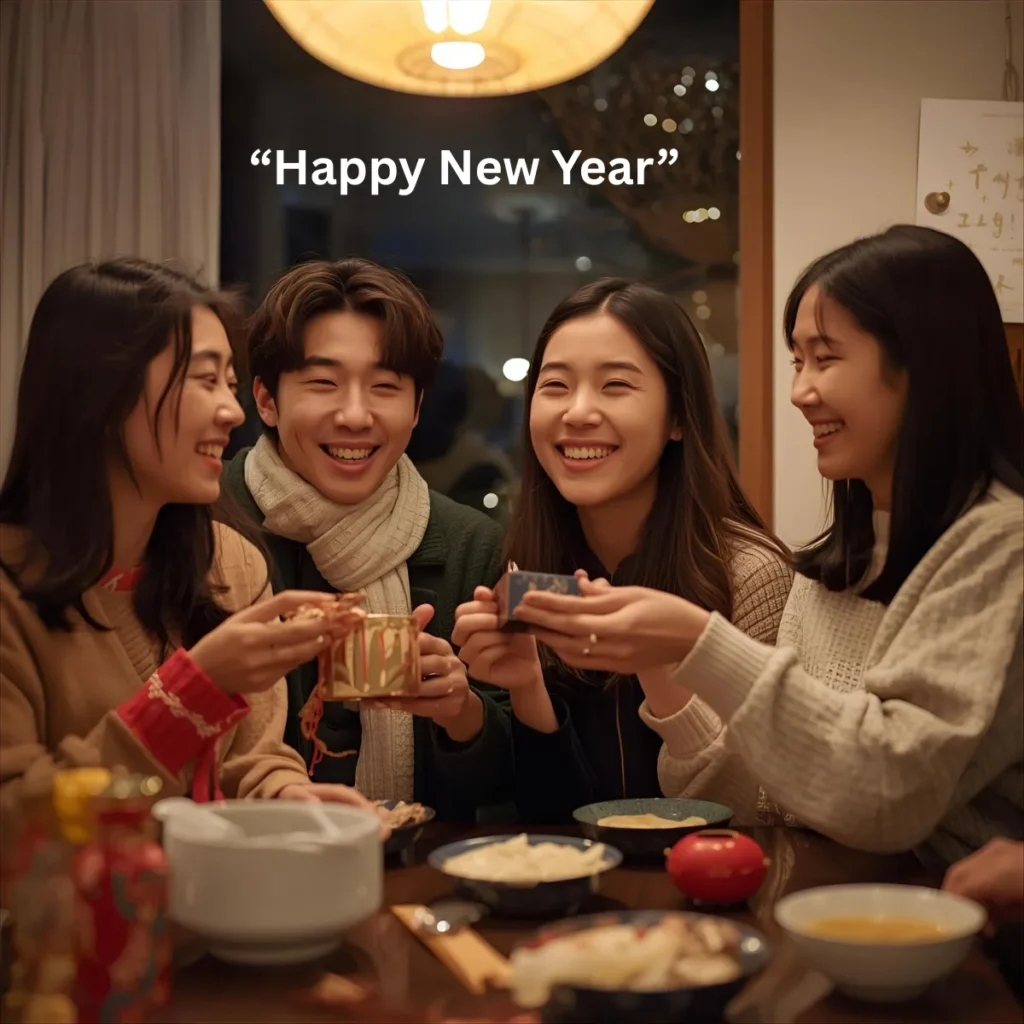
Meaning: May you receive many blessings in the New Year.
Origin: Traditional Korean phrase used in greetings during Seollal.
Example: 새해 복 많이 받으세요! (Happy New Year!)
Usage: Most common and polite way to wish someone a Happy New Year.
2. 복 많이 받아요 (Bok mani badayo) – “Receive many blessings”
Meaning: Wishing you lots of luck and happiness.
Origin: Derived from the concept of “bok,” meaning fortune or blessing.
Example: 올 한 해 복 많이 받아요!
Usage: Friendly and less formal version used with peers or younger people.
3. 즐거운 새해 되세요 (Jeulgeoun saehae doeseyo) – “Have a joyful New Year”
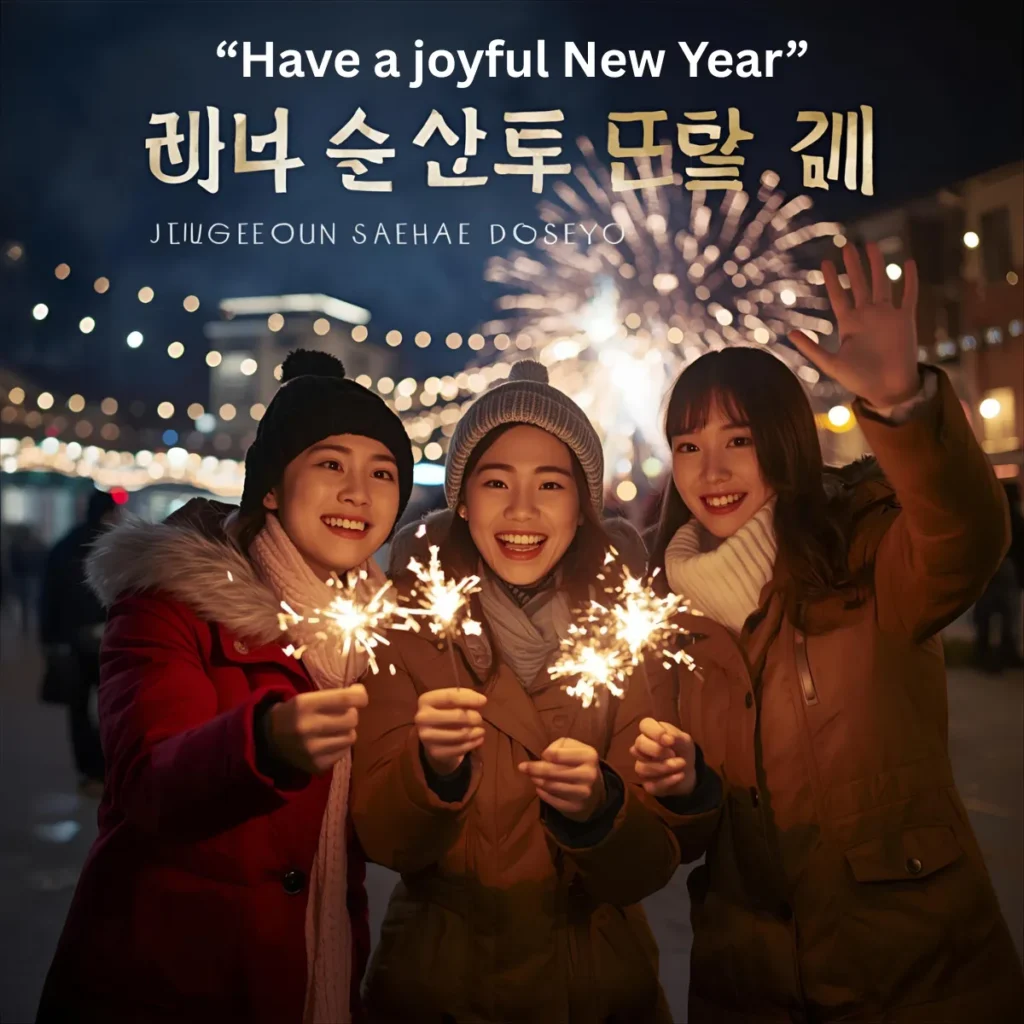
Meaning: May your New Year be full of joy.
Origin: Modern well-wishing phrase combining joy (즐거운) and New Year (새해).
Example: 새해에도 즐거운 일만 가득하세요!
Usage: Great for friends, coworkers, or greeting cards.
4. 새해 복 가득하세요 (Saehae bok gadeukaseyo) – “May your year be filled with blessings”
Meaning: Wishing you a year overflowing with good fortune.
Origin: Rooted in traditional Seollal blessings.
Example: 새해 복 가득하세요, 선생님!
Usage: Polite and respectful tone for elders or teachers.
5. 건강한 새해 되세요 (Geonganghan saehae doeseyo) – “Have a healthy New Year”

Meaning: Wishing good health in the New Year.
Origin: Reflects the cultural importance of health and harmony.
Example: 올 새해에는 건강한 한 해 되세요!
Usage: Often used in formal or family greetings.
6. 새해에도 행복하세요 (Saehae-edo haengbokhaseyo) – “Be happy in the New Year too”
Meaning: Continue to be happy in the coming year.
Origin: Derived from the phrase “행복하다” meaning “to be happy.”
Example: 올해도 행복하세요!
Usage: Great for close friends, family, or colleagues.
7. 새해 잘 보내세요 (Saehae jal bonaeseyo) – “Have a good New Year”
Meaning: Hope you enjoy the New Year’s holiday.
Origin: Everyday expression used in both speech and messages.
Example: 새해 잘 보내세요!
Usage: Informal but polite — perfect for messages and casual greetings.
8. 희망찬 새해 되세요 (Huimangchan saehae doeseyo) – “Have a hopeful New Year”
Meaning: May your year be filled with hope.
Origin: “희망찬” means full of hope.
Example: 희망찬 새해를 맞이하세요!
Usage: Great for New Year speeches or written cards.
9. 풍성한 새해 되세요 (Pungseonghan saehae doeseyo) – “Have an abundant New Year”
Meaning: Wishing you plenty of blessings and success.
Origin: Comes from “풍성한,” meaning rich or abundant.
Example: 풍성한 한 해 보내세요!
Usage: Common in business or formal greetings.
10. 새해엔 좋은 일만 가득하세요 (Saehae-en joeun ilman gadeukaseyo) – “May only good things fill your year”
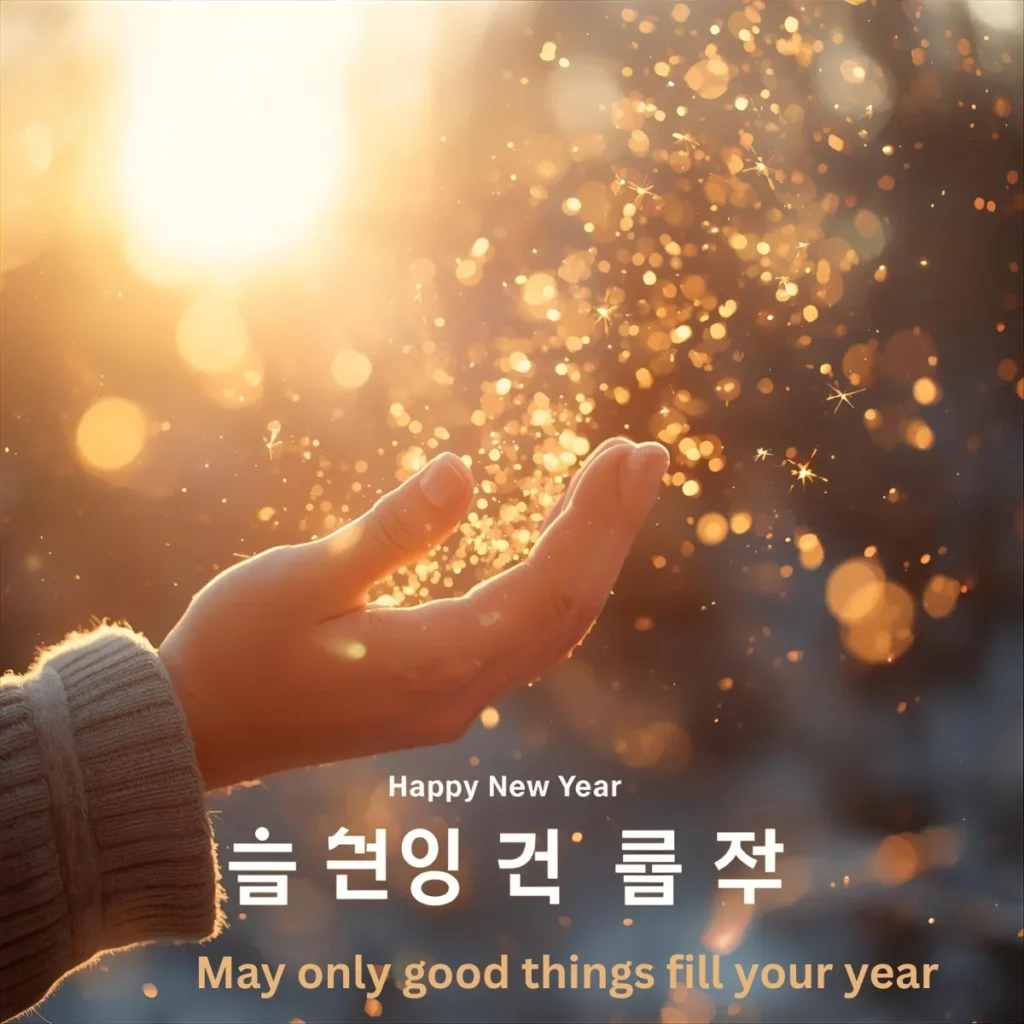
Meaning: A wish for positivity and success.
Origin: Everyday spoken blessing.
Example: 새해엔 좋은 일만 있길 바라요!
Usage: Friendly tone — ideal for social media or friends.
11. 행복한 새해 보내세요 (Haengbokhan saehae bonaeseyo) – “Have a happy New Year”
Meaning: Wishing happiness for the whole year.
Origin: Modern phrase from the word “행복” (happiness).
Example: 행복한 새해 보내세요!
Usage: Simple and universal greeting for all situations.
12. 새해엔 웃음 가득하세요 (Saehae-en useum gadeukaseyo) – “May your year be full of laughter”
Meaning: Wishing joy and smiles in the coming year.
Origin: Based on the Korean value of spreading happiness.
Example: 새해엔 웃음이 끊이지 않길!
Usage: Friendly, casual expression for close friends.
13. 새해에는 더 행복하세요 (Saehae-eneun deo haengbokhaseyo) – “Be even happier this year”
Meaning: Wishing greater happiness than before.
Origin: A heartfelt expression of continuous improvement.
Example: 새해에는 더 행복하세요!
Usage: Warm phrase for both personal and professional greetings.
14. 좋은 새해 되시길 바랍니다 (Joeun saehae doesigil baramnida) – “I hope you have a good New Year”
Meaning: A respectful wish for someone’s well-being.
Origin: Comes from the verb “바라다,” meaning to hope or wish.
Example: 좋은 새해 되시길 바랍니다, 사장님.
Usage: Polite and formal tone used in business or elder contexts.
15. 새해 인사드립니다 (Saehae insadeurimnida) – “I offer you New Year’s greetings”
Meaning: A very respectful greeting for formal situations.
Origin: Traditional formal phrase used during ceremonies or letters.
Example: 새해 인사드립니다. 건강과 행복을 빕니다.
Usage: Perfect for professional settings and written cards.
FAQs
1. What is the most common way to say Happy New Year in Korean?
→ 새해 복 많이 받으세요 is the most popular and polite phrase.
2. How do you say Happy New Year to friends?
→ You can say 복 많이 받아요 or 새해 잘 보내! for a friendly tone.
3. Is it okay to use Happy New Year in English in Korea?
→ Yes, many young Koreans also say “Happy New Year!” casually.
4. When do Koreans celebrate New Year?
→ Koreans celebrate both the solar New Year (January 1) and Lunar New Year (Seollal).
5. What is Seollal?
→ Seollal (설날) is the Korean Lunar New Year, one of the biggest family holidays.
6. How do you say New Year’s Eve in Korean?
→ It’s called 제야 (Jeya).
7. How can I wish Happy New Year formally?
→ Say 새해 인사드립니다 or 좋은 새해 되시길 바랍니다.
8. Can I use emojis in Korean New Year messages?
→ Yes 🎉, it’s common in modern texting.
9. What gifts are given during Seollal?
→ People exchange money envelopes, food sets, or health products.
10. What should I avoid saying?
→ Avoid overly casual phrases when speaking to elders; always use polite endings.
Conclusion:
Learning how to say Happy New Year in Korean connects you deeply with Korean culture and traditions. From casual wishes like 새해 잘 보내세요 to respectful greetings like 새해 인사드립니다, each phrase shows warmth, hope, and good manners. Whether you’re messaging a friend or addressing a business partner, using the right Korean greeting will make your wishes truly heartfelt.