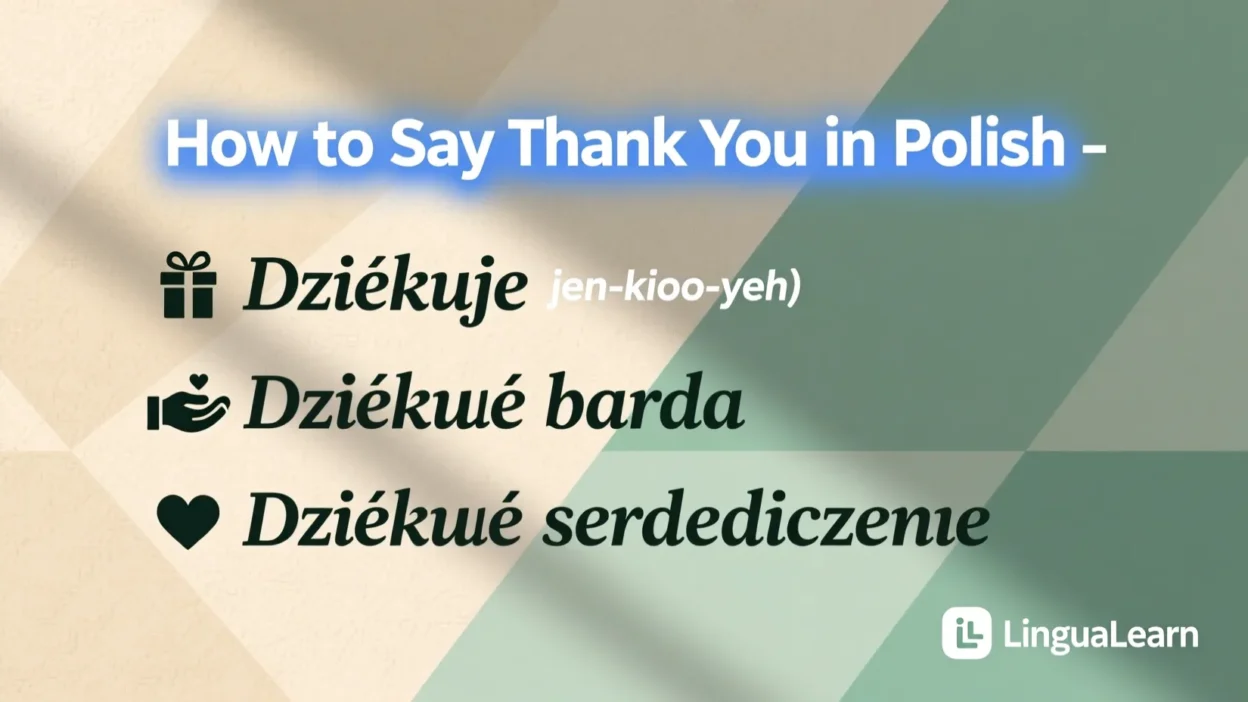
“Thank you” in Polish is most commonly said as “Dziękuję.” It’s a polite and widely used word suitable for both formal and everyday situations. In casual conversations, people may also say “Dzięki,” which is similar to saying “thanks.”
Many users search for how to say thank you in Polish when learning basic Polish phrases, traveling to Poland, or speaking with Polish friends. The user intent is clear: they want simple, correct, and practical expressions of gratitude.
In this guide, you’ll learn the different ways to say “thank you” in Polish, when to use formal versus informal phrases, and pronunciation tips. These beginner-friendly explanations help you express appreciation confidently and respectfully.
Say Thank You in Polish with Examples
Let’s explore 15 ways to say thank you in Polish, complete with origins, examples, and practical usage.
1. Dziękuję
Origin: Standard formal way to say “thank you” in Polish.
Example:
👤 A: Dziękuję za pomoc.
👤 B: Nie ma za co.
Use: Formal, polite, universal in Polish-speaking regions.
2. Dzięki
Origin: Informal version of Dziękuję, commonly used among friends.
Example:
👤 A: Dzięki za pomoc!
👤 B: Nie ma za co.
Use: Casual, friendly situations.
3. Dziękuję bardzo
Origin: “Thank you very much,” polite and slightly emphatic.
Example:
👤 A: Dziękuję bardzo za wszystko.
👤 B: Nie ma sprawy.
Use: Formal or informal, stronger expression of gratitude.
4. Bardzo dziękuję
Origin: Another way to say “thank you very much,” formal and warm.
Example:
👤 A: Bardzo dziękuję za twoją pomoc.
👤 B: Nie ma za co.
Use: Polite, slightly formal, friendly tone.
5. Dzięki wielkie
Origin: Informal, “big thanks.”
Example:
👤 A: Dzięki wielkie!
👤 B: Nie ma sprawy.
Use: Informal, casual, friendly.
6. Dziękuję Ci
Origin: Informal, “I thank you” addressing a friend.
Example:
👤 A: Dziękuję Ci za pomoc.
👤 B: Nie ma za co.
Use: Informal, personal, friendly.
7. Dziękuję Panu / Pani
Origin: Formal, addressing a man (Panu) or woman (Pani).
Example:
👤 A: Dziękuję Panu za czas.
👤 B: Proszę bardzo.
Use: Formal, respectful, professional.
8. Serdecznie dziękuję
Origin: “Heartfelt thanks,” polite and sincere.
Example:
👤 A: Serdecznie dziękuję za wsparcie.
👤 B: Nie ma za co.
Use: Formal or emotional situations.
9. Wielkie dzięki
Origin: “Many thanks,” informal and enthusiastic.
Example:
👤 A: Wielkie dzięki za pomoc!
👤 B: Nie ma sprawy.
Use: Casual, friendly, enthusiastic.
10. Dziękuję najmocniej
Origin: “Thanks the most,” very polite, heartfelt.
Example:
👤 A: Dziękuję najmocniej za wszystko.
👤 B: Nie ma za co.
Use: Formal, warm, sincere.
11. Dzięki Ci bardzo
Origin: Informal, “thanks to you very much.”
Example:
👤 A: Dzięki Ci bardzo!
👤 B: Nie ma sprawy.
Use: Informal, casual, friendly.
12. Dzięki śliczne
Origin: Informal, “thanks so much,” warm and friendly.
Example:
👤 A: Dzięki śliczne za prezent!
👤 B: Nie ma za co.
Use: Informal, friendly, enthusiastic.
13. Nie ma za co
Origin: Literally “there’s nothing to thank for,” humble response.
Example:
👤 A: Dziękuję!
👤 B: Nie ma za co.
Use: Polite, casual or formal, humble reply.
14. Proszę bardzo
Origin: Literally “you’re welcome,” used as a reply to thanks.
Example:
👤 A: Dziękuję!
👤 B: Proszę bardzo.
Use: Polite, universal, formal or informal.
15. Cieszę się, że mogłem pomóc
Origin: “I’m glad I could help,” heartfelt and polite.
Example:
👤 A: Dziękuję za wsparcie.
👤 B: Cieszę się, że mogłem pomóc.
Use: Formal or informal, warm and sincere.
FAQs
- What is the most common way to say thank you in Polish?
→ Dziękuję (formal) / Dzięki (informal) - How do you say thank you politely and formally?
→ Dziękuję bardzo, Bardzo dziękuję, Dziękuję Panu / Pani, Serdecznie dziękuję - What is a casual way to say thanks?
→ Dzięki, Dzięki wielkie, Wielkie dzięki, Dzięki Ci bardzo - How do you respond politely to thanks?
→ Nie ma za co, Proszę bardzo - Is there an enthusiastic way to say thanks?
→ Dzięki śliczne, Wielkie dzięki, Dziękuję najmocniej - Which phrases are informal among friends?
→ Dzięki, Dzięki wielkie, Dzięki Ci bardzo, Dzięki śliczne - How do you express heartfelt gratitude formally?
→ Serdecznie dziękuję, Dziękuję najmocniej, Cieszę się, że mogłem pomóc - Are short forms like “Dzięki” widely understood?
→ Yes, very common among friends and informal situations. - Can “Proszę bardzo” be used in formal situations?
→ Yes, polite and universal. - Do all these phrases work in Polish-speaking regions?
→ Yes, standard and widely understood.
Conclusion:
Learning how to say Thank You in Polish is a simple but meaningful way to show politeness and respect. Using the correct phrases helps you connect better with Polish speakers and makes your interactions warmer and more natural. By practicing these expressions, you’ll gain confidence in everyday conversations, whether traveling, meeting new people, or engaging in Polish culture. The more you use them, the more natural and fluent your gratitude will feel.